How Does the Map Decide Your Hero in Marvel Rivals?
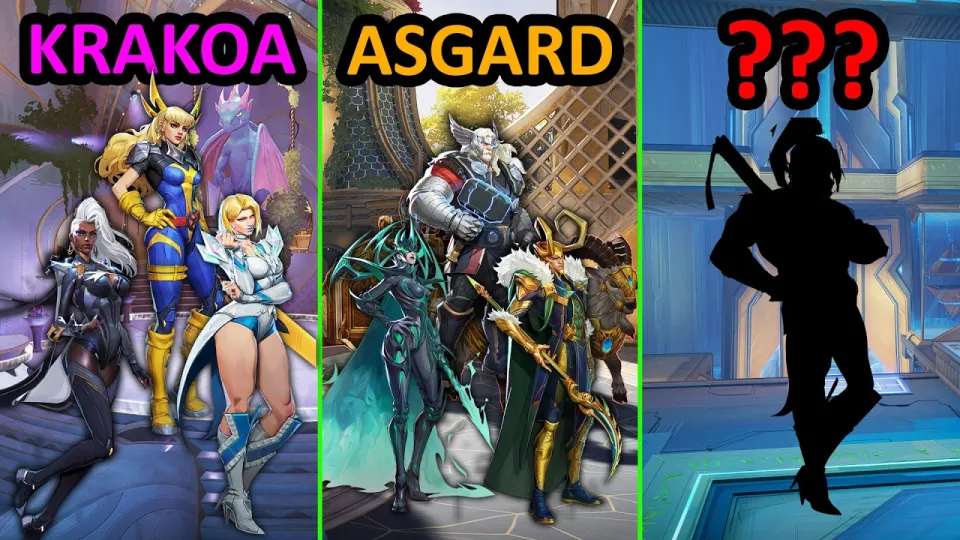
Video: The MAP Decides Our Heroes in Marvel Rivals
Need articles like this for your video? They help promote it on YouTube and Google — order them in the Telegram bot @sat_sit_bot. It writes articles around your video, embeds the video and publishes them on popular niche websites (no ads). Your first 50 articles are free.
· based on the channel Salty Phish
Key takeaways
- Marvel Rivals has 8+ competitive maps across Yggsgard, Klyntar, Wakanda, Tokyo 2099, New York and the Intergalactic Empire of Wakanda.
- A map-locked challenge means each lobby's map restricts the roster to heroes with a canonical link to that location.
- Klyntar points to Venom and symbiote-linked picks; Asgardian maps open Thor, Loki, Hela, Odin-adjacent heroes and more.
- Lore debates decide edge cases: Iron Man's Stark-Fujikawa ties to Shin-Shibuya, Bucky's Wakandan arm, Devil Dinosaur in New York.
- Salty Phish runs this format in quickplay on Season 9, The Mystery of Thebes, without The Hood in the roster.
Marvel Rivals is a 6v6 hero shooter where the map you queue into can shape your entire team composition, because each location in the game is tied to a specific corner of Marvel lore. If you enforce a map-based rule, the location picks your hero for you: Klyntar means symbiotes, Asgard means Norse gods, Wakanda means the royal family and its allies. Streamer Salty Phish built a full challenge around exactly that idea, and you can watch the live version of the format on his Twitch channel, where the runs are played out in real time.
What the map-based hero rule actually means in Marvel Rivals
The rule is simple to state and hard to enforce: before each match, look at the map, then pick only heroes who have a canonical connection to that place. In the Salty Phish video, the team rolls a new composition every game in quickplay, and the map roll decides which characters are legal. That turns a normal queue into a draft puzzle, because some locations have a deep bench of lore-appropriate heroes and others have two or three obvious picks plus a pile of arguments.
The format works because Marvel Rivals maps are not generic arenas. Each one carries a location name, a visual identity and, in most cases, voice lines and backstory that reference specific characters. That gives players a real, checkable basis for the rule instead of pure vibes.
Which heroes fit which Marvel Rivals map
Map-to-hero mapping is the core of the challenge, and the obvious picks are the ones the game itself signals. Below is a working list of the main locations and the heroes most people would allow on them.
- Klyntar — the symbiote homeworld. Venom is the anchor pick, and any symbiote-adjacent character is easy to justify. This is the thinnest roster in the game, which is exactly what makes it a fun restriction.
- Yggsgard and other Asgardian maps — Thor, Loki and Hela are the clean picks. Anyone tied to the Norse pantheon or Asgard's court fits the theme.
- Wakanda and the Intergalactic Empire of Wakanda — Black Panther, Shuri-linked characters and Wakandan allies. The spaceport variant widens the pool considerably.
- Tokyo 2099 and Shin-Shibuya — futuristic Japan, which pulls in Spider-Man 2099, Peni Parker and other future-tech heroes.
- New York maps, including Midtown and Lower Manhattan — the broadest category in the game, since a huge share of Marvel heroes are based in New York.
- Krakoa and other mutant locations — X-Men and mutant-adjacent picks.
The interesting part is not the obvious names but the arguments at the edges, and the video's comment section turned into a full lore audit of the host's picks.
Where the lore arguments start
The most contested calls are the ones where a hero has a documented but non-obvious link to a map. Viewers pushed back on several picks, and their reasoning is worth knowing if you want to run this challenge yourself.
- Iron Man on Shin-Shibuya. The Stark-Fujikawa building appears on the Tokyo 2099 map, and Tony Stark's company has a canonical presence there, including in-game dialogue. That makes Iron Man a defensible pick on a map most people would reserve for Spider-Man 2099.
- Punisher and Captain America on Spider-Island. The 2099 setting is the argument: both characters exist in that timeline, so a strict "who belongs to this era" reading lets them in.
- Winter Soldier on Wakandan maps. In Rivals lore, Bucky's arm comes from Wakanda rather than from Tony Stark, and an in-game interaction between the two makes the point directly. That is enough to justify Bucky on Black Panther's home turf.
- Guardians of the Galaxy on the Wakanda spaceport. The Guardians are hired by Wakanda in the game's backstory, and the Milano can be seen leaving the spaceport in map animations. A generous reading opens the whole squad, and even Venom by extension.
- Devil Dinosaur on New York maps. Devil Dinosaur lives in New York with Moon Girl, so a giant dinosaur running around Manhattan is canon rather than a stretch.
- Psylocke, Jeff and Mantis in the Collector's museum. The game's backstory places several characters in the Collector's collection, which makes them arguable picks on any map tied to that storyline.
The pattern is consistent: the stricter your rule, the more you need to cite something specific, and the game's own dialogue and map details usually provide the citation.
How to run the challenge yourself
You can set this up in a few minutes without any special tools, and it works in quickplay as well as in a stack.
- Queue into a match and note the map before locking in.
- Name the legal roster out loud so your team agrees on the boundaries before anyone picks.
- Decide in advance whether you are playing the strict version (only heroes with a direct, citable link) or the loose version (thematic connection is enough).
- Ban the obvious flex picks that fit everywhere, or the challenge collapses into the same three heroes every game.
- Rotate the rule each match so nobody is stuck on the same character for an entire session.
Two practical notes from the format: Klyntar and other narrow maps will force awkward compositions, so treat those games as comedy rather than as a test of skill. And if you are playing with a full squad, agree on the roster before the spawn doors open, because mid-match lore debates cost you the round.
Common points of confusion about map-locked picks
Most disagreements in this format come from mixing up the map's setting with the character's origin. Shin-Shibuya and Spider-Island are both Tokyo 2099 locations, but they are different maps with different details, and swapping them produces bad rulings. The same applies to Wakanda proper versus the Intergalactic Empire of Wakanda: the spaceport version is a space-faring hub, which is why cosmic characters become legal there and not on the ground-level map.
A second source of confusion is treating the game's backstory as optional. Marvel Rivals writes its own lore, and it diverges from the films in ways that matter here. Bucky's arm is the clearest example, and the Guardians' Wakanda contract is another. If you rule only from movie knowledge, you will ban picks the game itself supports.
Finally, remember that the roster is still growing. Season 9, The Mystery of Thebes, added new skins and battle pass content, and each new hero adds a new set of map connections to argue about. The challenge gets richer over time, not simpler.
Useful links
- Live streams and the full challenge runs: http://www.twitch.tv/saltyphish/
- Short updates: https://twitter.com/SaltyPhish
- Clips and shorts: https://www.tiktok.com/@saltyphish
- Community discussion: https://reddit.app.link/r_SaltyPhish
- Behind-the-scenes posts: https://www.instagram.com/saltyphish/
- Community chat: https://discord.com/invite/saltyphish
The verdict on map-based hero picks
The map-based hero rule is one of the better self-imposed challenges in Marvel Rivals because it uses the game's own worldbuilding instead of an arbitrary handicap. It forces you off your comfort picks, it makes thin-roster maps like Klyntar genuinely funny, and it rewards players who actually read the lore and listen to voice lines. The arguments are the point: a ruling you can cite from a map detail or a character interaction is more satisfying than one you cannot. Salty Phish built the format as a casual quickplay bit, and it holds up as a repeatable way to play with friends. If you want to see the format in action, catch the next run live at Salty Phish on Twitch.
Source: The MAP Decides Our Heroes in Marvel Rivals · Markdown version
Questions & answers
Can you really pick heroes based only on the map in Marvel Rivals?
Yes, as a self-imposed rule. The game does not enforce it, so the restriction lives entirely in your team's agreement. You check the map before locking in, name the legal roster, and stick to it for the match.
Is Iron Man a valid pick on Shin-Shibuya?
Many players argue yes, because the Stark-Fujikawa building appears on the Tokyo 2099 map and Tony Stark's company has a canonical presence there, including dialogue. It is one of the most debated edge cases in the format.
Why would Winter Soldier count on Wakandan maps?
In Marvel Rivals lore, Bucky's arm comes from Wakanda rather than from Stark technology, and an in-game interaction between Bucky and Iron Man confirms it. That link is enough for most players to allow him on Black Panther's home maps.
Which map is hardest for this challenge?
Klyntar is the tightest, because the symbiote roster is tiny and Venom is the anchor pick. Narrow maps force strange compositions, so treat those matches as casual fun rather than a serious test.